
Introduction
The jewellery industry has evolved rapidly over the past few years. Today, buyers are no longer choosing only between gold and silver — they are also comparing:
- Natural diamonds
- Lab-grown diamonds
- Moissanite stones
- CZ stones
- AD jewellery
With so many options available in the market, many people become confused about what is real, what is artificial, and what actually offers long-term value.
Questions like:
- Are lab-grown diamonds fake?
- What is AD jewellery meaning?
- Is Moissanite better than diamond?
- How can you identify real vs fake diamonds?
have become increasingly common among modern jewellery buyers.
In this guide, we’ll break down the differences between real diamonds and artificial diamond alternatives so you can make smarter and more informed jewellery purchases.
What Are Natural Diamonds?
Understanding Real Diamonds
Natural diamonds are formed deep inside the Earth under extreme heat and pressure over billions of years.
They are mined from the earth and then:
- Cut
- Polished
- Certified
- Set into jewellery
Because of their rarity and natural formation process, real diamonds are considered highly valuable and luxurious.
Key Features of Natural Diamonds
| Feature | Description |
|---|---|
| Origin | Naturally formed underground |
| Formation Time | Billions of years |
| Rarity | Rare |
| Value | High investment value |
| Durability | Extremely durable |
| Certification | GIA, IGI, HRD etc. |
Natural diamonds are traditionally associated with:
- Engagement rings
- Luxury jewellery
- Heirloom collections
- Investment jewellery
What Are Lab-Grown Diamonds?
Artificial Diamonds Created in Laboratories
Lab-grown diamonds are real diamonds created inside controlled laboratory environments instead of being mined from the earth.
They have:
- The same chemical structure
- Similar hardness
- Similar sparkle
- Similar appearance
as natural diamonds.
Are Lab-Grown Diamonds Fake?
No.
Lab-grown diamonds are technically real diamonds because they are made of carbon and possess the same crystal structure as mined diamonds.
However, they are classified differently because they are man-made.
Natural Diamonds vs Lab-Grown Diamonds
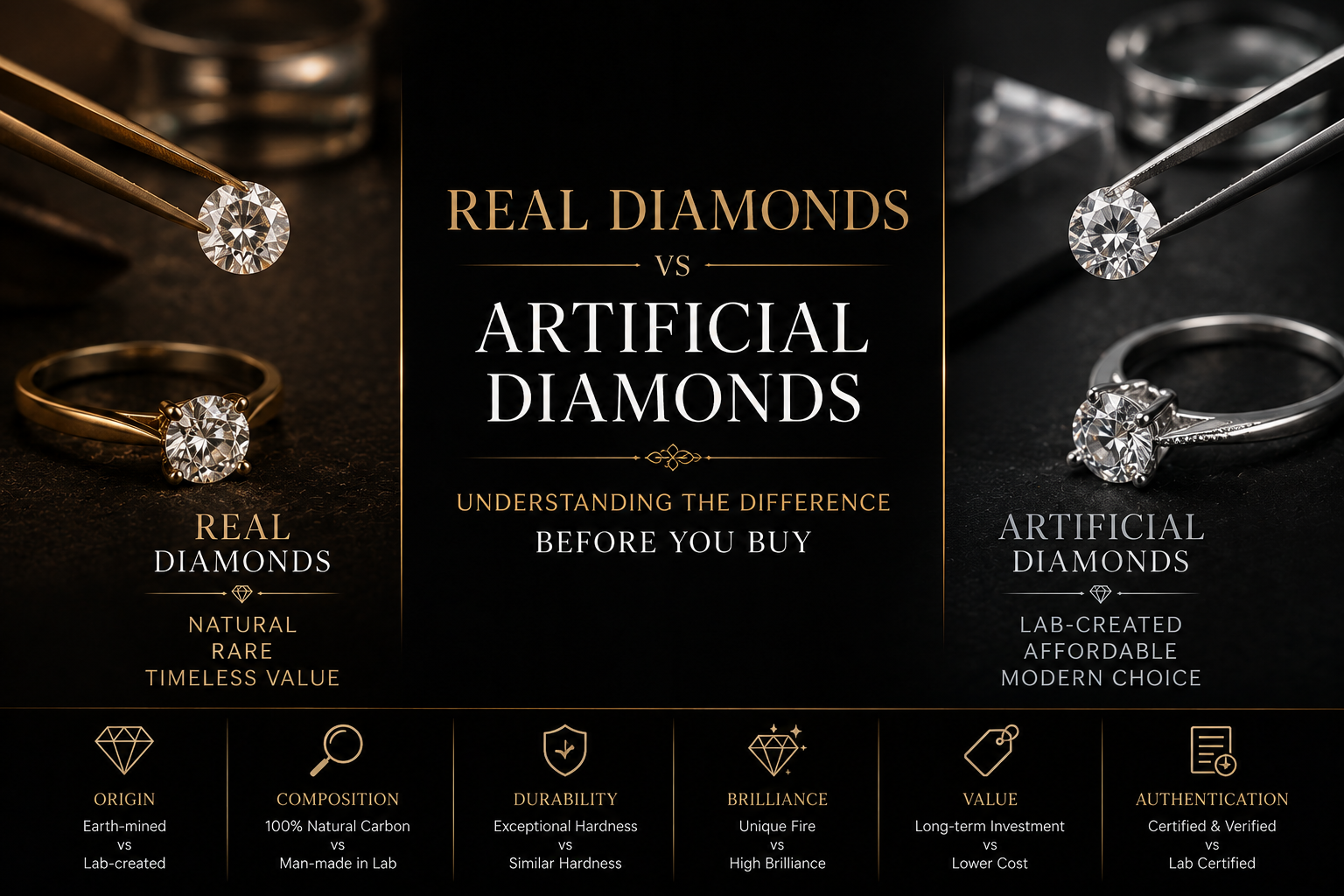
| Feature | Natural Diamonds | Lab-Grown Diamonds |
|---|---|---|
| Origin | Earth-mined | Laboratory-created |
| Rarity | Rare | Easily produced |
| Resale Value | Higher | Lower |
| Price | Expensive | More affordable |
| Formation | Natural process | Technological process |
| Emotional Value | Traditional luxury | Modern alternative |
What is AD Jewellery?
AD Jewellery Meaning
AD jewellery stands for Artificial Diamond Jewellery.
These are jewellery pieces that use diamond-like stones instead of real diamonds.
AD jewellery is popular because it offers:
- Luxury appearance
- Affordable pricing
- Fashion versatility
- Lightweight designs
Most AD jewellery uses stones like:
- Cubic Zirconia (CZ)
- American Diamonds
- Synthetic crystals
Although AD jewellery looks glamorous, it does not carry the same intrinsic value as real diamonds.
What Are CZ Stones?
Understanding Cubic Zirconia
Cubic Zirconia (CZ) is one of the most common artificial diamond alternatives used in fashion jewellery.
CZ stones are:
- Man-made
- Highly reflective
- Budget-friendly
- Visually similar to diamonds
Advantages of CZ Stones
- Affordable pricing
- Attractive shine
- Ideal for occasional wear
- Wide availability
Limitations of CZ Stones
- Less durable than diamonds
- Can become cloudy over time
- Lower long-term value
- Easily scratched
CZ jewellery is commonly used in:
- Fashion jewellery
- Bridal imitation sets
- Trend-based accessories
Moissanite vs Diamond
What is Moissanite?
Moissanite is a gemstone originally discovered in meteorite particles and is now created in laboratories.
It is one of the most popular diamond alternatives because of its exceptional brilliance.
Moissanite vs Diamond — Key Differences
| Feature | Diamond | Moissanite |
|---|---|---|
| Hardness | 10 Mohs | 9.25 Mohs |
| Sparkle | White brilliance | Rainbow-like fire |
| Price | Expensive | More affordable |
| Rarity | Natural rarity | Lab-created |
| Durability | Extremely high | Very durable |
Does Moissanite Look Like Diamond?
Yes, very closely.
In fact, many people cannot distinguish Moissanite from diamond without professional testing.
However, Moissanite usually displays:
- More colorful sparkle
- Higher fire dispersion
- Slightly different light reflection
Real vs Fake Diamonds — How to Identify Them
Many artificial stones are designed to imitate real diamonds. Understanding buyer awareness is extremely important before making expensive purchases.
Signs of Real Diamonds
Real Diamonds Usually Have:
- Certification
- Natural inclusions
- Strong durability
- Professional grading
- Higher pricing
- Consistent brilliance
Signs of Artificial Diamonds or Fake Stones
Artificial Stones Often:
- Look overly perfect
- Cost extremely less
- Lack certification
- Lose shine over time
- Feel lighter in weight
Why Buyer Awareness Matters
The jewellery market contains both genuine and imitation products. Many buyers unknowingly purchase artificial stones believing they are real diamonds.
Understanding the difference helps buyers:
- Avoid overpaying
- Make informed investments
- Choose jewellery according to budget
- Understand long-term value
- Buy from trusted jewellers confidently
Which Option is Best for You?
Choose Natural Diamonds If:
- You want investment value
- You prefer rarity
- You want heirloom jewellery
- You value traditional luxury
Choose Lab-Grown Diamonds If:
- You want real diamond appearance at lower cost
- You prefer modern alternatives
- You want larger stones within budget
Choose Moissanite If:
- You love extra sparkle
- You want durability at lower pricing
- You need a premium diamond alternative
Choose AD Jewellery or CZ If:
- You want affordable fashion jewellery
- You frequently follow trends
- You need occasional wear accessories
Tips Before Buying Any Diamond Jewellery
Always Check:
- Certification authenticity
- Seller reputation
- Stone type disclosure
- Return policy
- Warranty
- Pricing transparency
Trusted jewellers will always clearly explain whether the stone is:
- Natural diamond
- Lab-grown diamond
- Moissanite
- CZ
- Artificial diamond
Conclusion
Understanding the difference between real diamonds and artificial diamond alternatives is essential before making any jewellery purchase.
From natural diamonds and lab-grown diamonds to Moissanite and AD jewellery, each option serves different needs, budgets, and preferences.
The best choice depends on:
- Your budget
- Purpose of purchase
- Long-term expectations
- Personal style
Whether you’re comparing Moissanite vs diamond, learning the meaning of AD jewellery, or identifying real vs fake diamonds, informed buying decisions will always help you choose jewellery with confidence and clarity.